
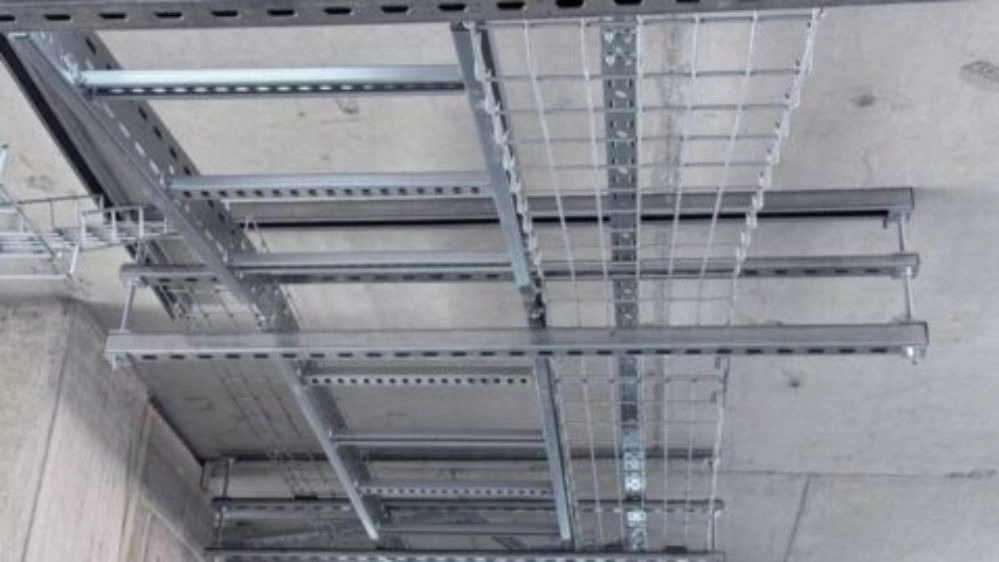
The importance of using cable trays in electrical installations
The structure and raw materials of the cable tray
Types of cable trays and their unique features
1. Perforated Cable Tray
2. Wire Mesh Cable Tray
3. Ladder Type Cable Tray
4. Solid Bottom Cable Tray
Advantages of using cable trays in industrial and construction projects
Increasing the lifespan of cables and reducing repair costs
One of the most important advantages of cable tray is the physical protection of cables against mechanical shocks and external pressures. When the cables are placed in the tray, direct contact with the floor, ceiling or other equipment is avoided. Also, by creating a clear path, cables are prevented from twisting and tangling, which is one of the main causes of cable failure.
High safety and order in wiring systems
Orderliness in electrical systems is not only aesthetic, but directly related to safety. Cable tray makes the path of the cables clear and traceable. In case of an error, technicians can quickly identify the faulty cable and take the necessary measures.
Also, the Cable Tray minimizes the risks of irregular wiring such as electrocution, fire caused by friction and physical injuries to personnel. In high-traffic industrial environments, installing trays at a height or along the walls makes traffic routes safer and prevents disturbing other activities.
Flexibility in future design and development
Cable tray systems are designed to be expandable and changeable. Unlike conduit cabling or pipes, which are very difficult and expensive to change, trays allow you to easily add new cables to the system or change their route.
This flexibility is critical for companies and factories that are constantly expanding and updating their equipment. By using various cable tray connections and accessories, it is possible to implement the most complex routes with different angles and height changes. Leading companies like rollforming-co.com provide this flexibility to engineers by offering a wide range of fittings.
Specialized applications of cable trays in various industries
Cable tray has wide applications in various industries. From small residential buildings to heavy oil and gas industries, everyone uses this equipment to manage their cables. In the following, we will examine some of these applications.
Application in oil, gas and petrochemical industry
In the oil, gas and petrochemical industries, the environmental conditions are very harsh and corrosive. Cable tray used in these industries must have high resistance to humidity, chemical vapors and high temperatures. Trays made of 304 or 316 steel or galvanized trays with special polymer coatings are usually used in these environments.
In addition to material resistance, Cable tray in these industries must have strong support systems so that cables remain in place in case of vibrations caused by heavy equipment or critical conditions. Safety is the first priority in these industries and the use of standard trays plays an important role in ensuring the safety of personnel and equipment.
Application in power plants and electricity industry
Power plants, whether thermal, hydro, or wind, have thousands of meters of power transmission and control cables that must be managed regularly. Cable tray in power plants is responsible for guiding high and low voltage cables from electrical panels to turbines and transformers.
In these environments, ladder cable tray is the first choice of engineers due to its high load bearing capacity and excellent ventilation. Also, in the cable tunnels that are dug in power plants for the safe transfer of cables, special trays are used that are resistant to fire and prevent the spread of fire between different parts of the power plant.
Application in data centers (Data Centers)
Data centers are the beating heart of today's digital world. In these centers, there are thousands of network cables and optical fibers for data transmission. Cable tray in data centers plays a vital role in managing these cables. The use of mesh or mesh trays is very common in these environments because they are both light in weight and easy to access cables for troubleshooting and changes.
In addition to managing network cables, cable trays are also used in data centers to manage power supply cables for servers and cooling equipment. Order in data center cabling is essential not only for beauty, but also to prevent disruption of signals and air flow management for cooling servers.
Application in residential and commercial buildings
In today's modern buildings, the number of electrical, telephone, antenna and network cables is very high. Cable tray is used in construction facilities to guide these cables from the main panel to different units and floors. In high-rise buildings, the use of vertical shafts equipped with fire-resistant trays is mandatory.
Using cable trays in buildings means that in case of need for repairs or changes in the electrical system or network, there is no need to destroy the walls and access to the cables through the access doors installed on the trays is easily possible.
How to choose and buy the right cable tray
The correct choice of cable tray has a direct impact on the performance and safety of the electrical system. To choose the best option, different factors should be considered. The first factor is the type and number of cables to be placed in the tray. This issue determines the required width and load capacity of the tray.
The second factor is the installation environment. As mentioned, for wet and corrosive environments, a steel or galvanized cable tray with a suitable coating should be used. For environments with fire risk, trays with epoxy or fireproof powder coating are recommended. The third factor is standards and technical approvals. It is very important to ensure that the purchased product has national and international standards related to mechanical and electrical resistance.
To view various and standard products and receive expert advice on choosing the right cable tray for your project, you can refer to the specialized website rollforming-co.com . Using technical knowledge and sufficient experience, these companies can offer the best solutions.
conclusion
Finally, it can be said that cable tray is one of the main pillars in electrical engineering and modern architecture. This simple but efficient equipment solves the challenges of cable management and increases the level of safety and productivity in projects. From large industrial factories to office buildings, traces of cable tray can be seen everywhere.
Choosing the correct type of tray, following the installation principles and paying attention to safety standards, guarantee the correct operation of the system in the long term. With the advancement of technology and the increasing need for data and energy transmission, the importance of these equipments will increase. It is hoped that this article has been able to provide you with a comprehensive view of cable tray and its types. For more information and to view products, we suggest you visit rollforming-co.com .